Moraine Lake, Canada
Moraine Lake
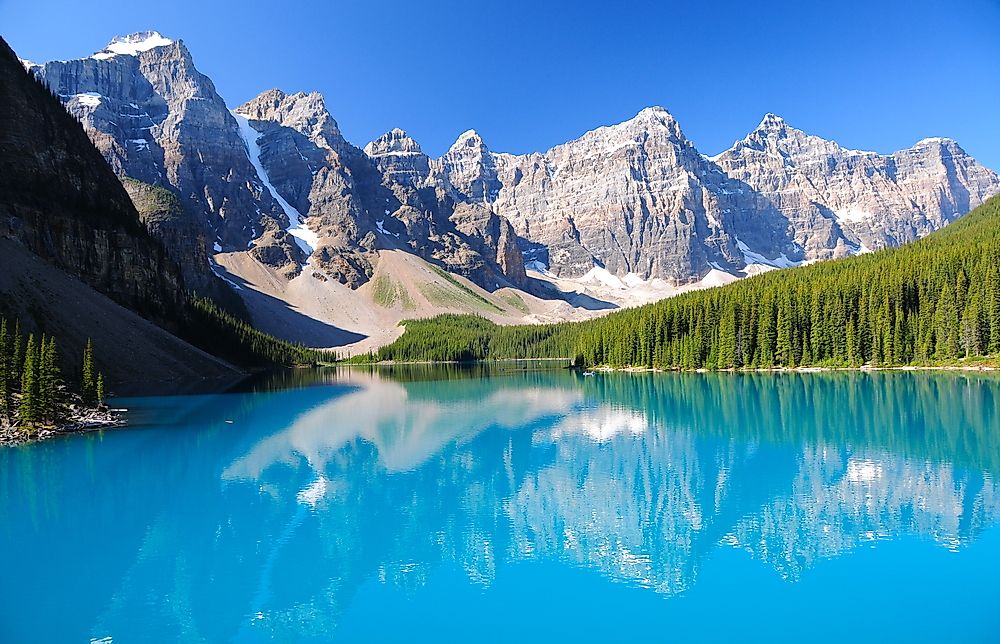
Its waters are the foremost amazing colour, a vivid shade of turquoise that changes in intensity through the summer because the glaciers melt. Set within the rugged Valley of the Ten Peaks, Moraine Lake is surrounded by mountains, waterfalls, and rock piles, creating a scene so stunning it almost seems unreal. Sit lakeside and absorb the sights and pure mountain air, or explore further by canoeing and hiking. It’s an iconically jaw-dropping place that's bound to leave an enduring impression.
Moraine Lake is 14 kilometres (8.7 miles) southeast of the hamlet of Lake Louise. Glacier-fed, its brilliant blue-green colour may be a results of light refracting off the rock flour (fine particles of rock) within the glacier run-off which flows into the lake. At an elevation of 1,885 metres (6,183 feet), the lake doesn't begin to melt until June. Water levels, and its vibrant colour, peak in late June.
There are several hikes round the lake starting from accessible walks to more strenuous hikes. The Rockpile Trail is a simple and short path with switchbacks along the rear of the moraine to the highest of the natural dam. The vista from the highest is understood because the “Twenty Dollar View”, because the scene featured on the rear of Canadian twenty dollar bills issued between 1969 and 1979.

Venturing further afield offers solitude from the crowds and a special perspective of the lake and its craggy surrounds. Other trails to explore include Moraine Lake Lakeshore Trail, Eiffel Lake, Wenkchemna Pass, Larch Valley, and Sentinel Pass. within the fall the larches illuminate in rich reminder yellow, gold, and orange and paint a surreal backdrop for a hike.
During times of high grizzly activity there are hiking restrictions in situ for several of the paths within the Moraine Lake area.
During the winter, cross-country skiers can take a 15-kilometre (9.3-mile) invigorating adventure to the top of the road and back. Parks Canada sets tracks for skiing which end at the point of view for the Consolation Valley and Ten Peaks. Access to the the lake itself isn't permitted during the winter thanks to the high avalanche risk from November to late April.


Comments
Post a Comment