Louvre Museum, France
Louvre Museum
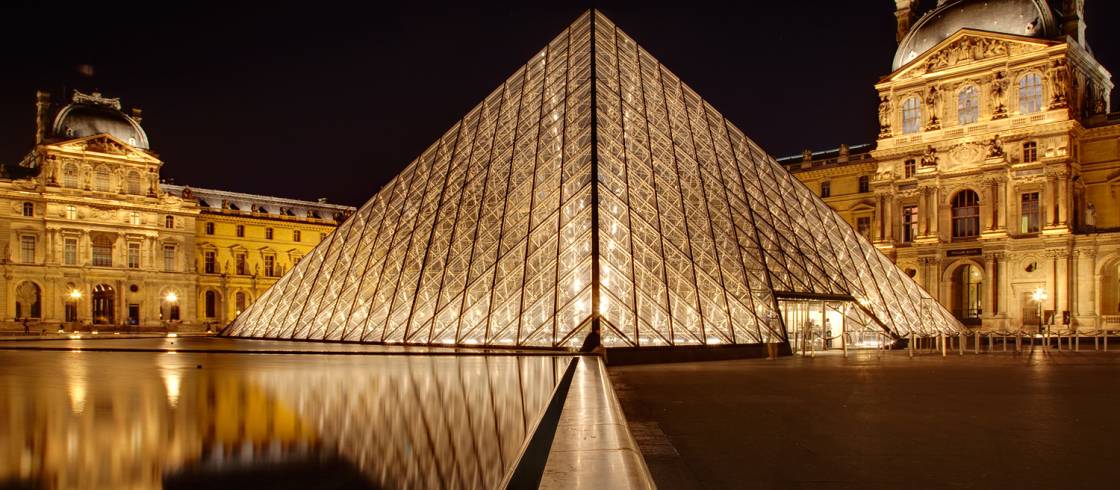
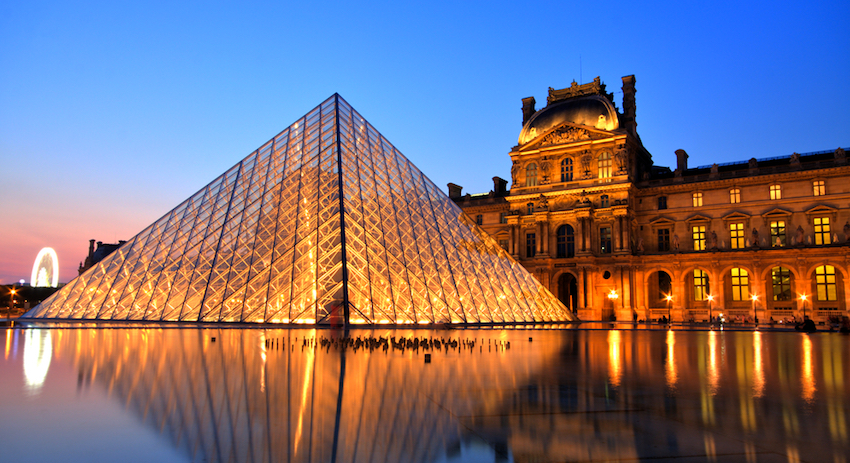
The Louvre is that the world's largest museum and houses one among the foremost impressive art collections in history. The magnificent, baroque-style palace and museum — LeMusée du Louvre in French — sits along the banks of the Seine in Paris. it's one among the city's biggest tourist attractions.
History of the Louvre
The Louvre was originally built as a fortress in 1190, but was reconstructed within the 16th century to function a royal palace. "Like many buildings, it had been built and rebuilt over the years," said Tea Gudek Snajdar, an Amsterdam-based historian , museum docent and a blogger at Culture Tourist.
During its time as a royal residence, the Louvre saw tremendous growth. Nearly every monarch expanded it, consistent with History.com. Today, it covers a complete area of 652,300 square feet (60,600 square meters). In 1682, Louis XIV moved the royal residence to Versailles, and therefore the Louvre became home to varied art academies, offering regular exhibitions of its members' works.
During the French Revolution , Louis XVI and his wife, Marie Antoinette , were forcibly faraway from Versailles and imprisoned in Tuilleries Palace, which was then adjacent to the Louvre, consistent with the Louvre’s official website. They were beheaded there in 1793.
The National Assembly opened the Louvre as a museum in August 1793 with a set of 537 paintings. The museum closed 1796 due to structural problems with the building. Napoleon reopened the museum and expanded the gathering in 1801, and therefore the museum was renamed Musée Napoléon.
"It was Napoleon who created the inspiration for the planet famous museum the Louvre is today," said Gudek Snajdar. "He wanted to be responsible of making a set of art in Louvre. That's why he renamed it in 1802 to the 'Napoleon Museum.' He wanted to make a museum of France with an exquisite collection of art from all round the world. He enlarged its collection by bringing art from his military campaigns, private donations and commissions he made."
Napoleon's contributions included spoils from Belgium, Italy, Prussia and Austria, consistent with Napoleon.org. In 1815, when Napoleon abdicated with the Treaty of Fontainebleau, almost 5,000 artworks were returned to their countries of origin. France was allowed to stay only a couple of hundred works, and therefore the Louvre reverted to its original name. Many artifacts from Napoleon's conquests in Egypt remained, consistent with History.com.
After Napoleon, the Louvre continued to expand. The multi-building Louvre Complex was completed under the reign of Napoleon III within the mid-19th century, consistent with napoleon.org


Comments
Post a Comment